
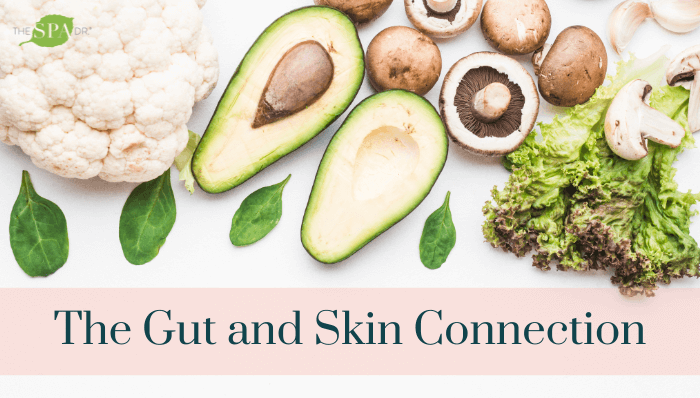
There is a key component of having healthy skin and overall health. It’s a connection that your dermatologist or esthetician probably hasn’t talked to you about – and that’s the skin and gut connection.
Digestion is essential for breaking down and absorbing nutrients in our food. We need certain micro and macronutrients for healthy skin that we get through a healthy diet. However, you can have the healthiest and best diet in the whole world, but if your digestion is not working, then you won’t get the nourishment you need. This can show up on your skin and create other health issues.
We now know that antibiotics destroy not only harmful bacteria when we take antibiotics, but also kill off the beneficial bacteria in our bodies. And as more and more research is showing, the bugs within our digestive system not only are important for digestion but they’re also connected to our skin.
The Role of the Gut Microbiome
One key to healthy digestion is the role of the gut microbiome. Our digestive tracts contain a delicate balance of microorganisms, such as bacteria. A well-functioning digestive tract has the right amount of good bugs, like lactobacillus and bifidobacteria, as you would find in yogurt cultures. A healthy microbiome does not have harmful bacteria, parasites, or an overgrowth of candida.
Your microbiome starts to develop before you are born and you’re exposed to your mother’s flora during birth. Over time, when we encounter toxins, stress, infections, poor dietary choices, antibiotics, and certain other medications, our gut microbiome ends up compromised – and it compromises our skin.
What Happens When the Gut Microbiome Weakens
One thing that can happen is hyper-permeability of the digestive tract lining – or what is sometimes called leaky gut syndrome. What happens is our digestive tract lining becomes more permeable than it should, and so food particles actually slip through enlarged gaps. This leads to our bodies creating an immune response because it sees these particles as foreign. This results in internal inflammation. In turn, this leads to skin-flammation problems like eczema, acne, or psoriasis.
Another digestive tract concern is constipation. If your exit route of eliminating waste and toxins is closed, then your body is not able to get rid of these elements. And our systems get backed up when this occurs. This too can create headaches, fatigue, irritability, and skin issues.
So how do you know if you have digestive issues? Well, often we can tell by our symptoms. If you have problems like diarrhea, constipation, undigested food particles in your stool, small or incomplete stools, heartburn pain, gas, or bloating, if you have any of those, then that can be a sign that you have some digestive tract issues – and this could be a sign of microbiome issues.
However, digestive symptoms don’t necessarily need to be present in order to have these gut problems. In fact, many people have digestive issues and don’t even know it. You can work with a physician to get lab testing and determine if you are experiencing any of these issues. Keep in mind that it’s usually a naturopathic physician or some type of functional medicine doctor that is more likely to run these types of specialty lab tests and look closely at this kind of approach. But it is important to look further into it.
What You Can Do to Improve The Gut and Skin Connection
In my practice, I’ve found that digestive issues are a key core component of most chronic health conditions that I see. So let’s talk about some ways to address these issues. Here are some quick tips to help enhance your digestion.
Manage stress
Stress management is the most important first step. Now, this can be a quick and easy thing, but it’s also a lifestyle change. It’s an ongoing choice that you must make every day. It may not seem like it, but stress does impact our gut health.
When we are chronically stressed, it eventually plays a role in our digestion. Doing simple things daily to help manage stress can help, such as breathing techniques, meditation, and yoga. Maybe for you, it’s something like reading, painting, or gardening. Whatever your choices are, figure out a way to manage stress every day.
Avoid unnecessary medications
The second step is to stay away from unnecessary medications. I know it’s not always easy to know if medication is necessary if you’re not a doctor. That’s why it’s essential to talk to your doctor about it if you are concerned. Ask your doctor if the medication you are concerned about is necessary. This is a good step because sometimes there are other treatments that might be less invasive. Never stop taking medication without speaking to a doctor.
Consider probiotics
The third step is if you have any of the digestive issues that I talked about, consider adding a probiotic supplement or adding fermented foods like kimchi and sauerkraut to your diet. These are fermented vegetables that are better for the skin than yogurt.
In addition, there are plenty of other fermented foods and drinks that do not contain dairy that contain active cultures. These can help restore the beneficial microorganisms in your digestive tract.
Consider nutritional supplements
Although we must start with food and what we’re eating to repair the gut microbiome, we also want to stop further damage. You may want to work with a functional medicine or naturopathic physician about the fourth step – using supplements such as probiotics. The Spa Dr.® Skin Probiotic Blend is designed to support a healthy gut microorganism balance while supporting healthy GI, skin, and immune function.* This dairy-free formulation is housed in a delayed-release capsule to increase intact delivery to the small intestine by protecting these organisms from stomach acid.
Eat nutrient-rich foods
The fifth step to improving gut health is to be sure you’re getting plenty of fiber and nutrient-rich foods in your diet. Most people aren’t getting enough fiber. Aim for about 30 grams of fiber a day. You can achieve this by eating several servings of vegetables.
You might also want to consider supplementing with a fiber supplement.
Also in your diet, you want to include good fats like coconut oil for cooking and olive oil for salad dressings and healthy protein sources. This includes legumes, nuts, and seeds. For those of you who eat meat, wild Alaskan salmon, grass-fed beef, and free-range chicken are good options.
Support detoxification pathways
The next step is to support your body’s natural detoxification pathways. Unfortunately, toxins are everywhere. They’re in our environment and our air, water, food, and personal care products. Many are unavoidable. The good news is our body is made to eliminate toxins from our bodies. Our kidneys, liver, and skin do a great job with this. These pathways are essential for dumping toxins. They are also important for keeping your hormones balanced.
I also recommend doing a well-designed cleanse program at least once a year to support detoxification.
*These statements have not been evaluated by the Food and Drug Administration. This product is not intended to diagnose, treat, cure, or prevent any disease.






Reader Interactions